

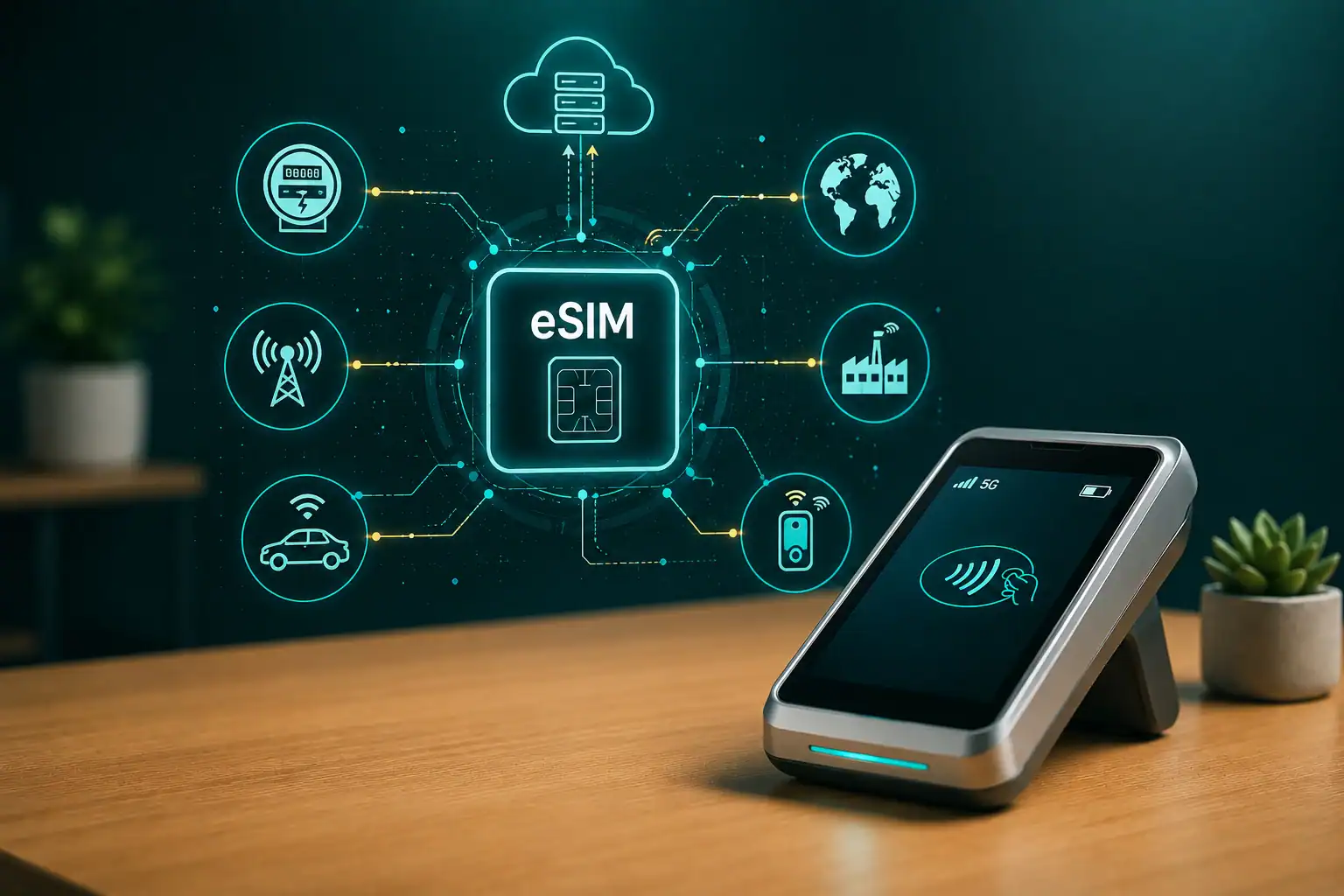
The eSIM ecosystem is evolving rapidly.
With new specifications such as SGP.32 emerging -a GSMA standard designed to enable remote SIM provisioning for IoT devices, particularly in large-scale and constrained environments-alongside existing standards like SGP.02 and SGP.22, connectivity management is becoming more flexible, but also more complex. These changes are driven by the need to support large-scale, remote, and heterogeneous deployments, particularly in IoT and connected environments.
For engineering and QA teams, this evolution has a direct impact: Testing is no longer straightforward.
A Growing Range of Use Cases
eSIM is now embedded across multiple industries, each with its own constraints and validation challenges
- IoT, from smart metering to asset tracking, remains the primary driver, with massive deployments and limited device interfaces
- Automotive, where connected vehicles require seamless connectivity across regions and operators
- Industrial systems, often deployed in remote or constrained environments with long lifecycles
- Connected consumer devices, where new form factors are expanding eSIM adoption
Across these domains, the common denominator is clear: reliable, interoperable connectivity must be ensured at scale.
Why Testing Requirements Are Increasing
As eSIM projects grow in scope and complexity, validation becomes more demanding.
Interoperability Across Multiple Actors
Lifecycle Management Validation
Automation as a Necessity
Scalability and Regression
Testing as a Key Enabler
In this context, testing is no longer a final step—it is a strategic capability.
Teams need tools that allow them to:
- Structure their validation processes
- Automate repetitive tasks
- Reproduce complex scenarios reliably
- Anticipate integration issues before deployment
Without this, ensuring performance and interoperability at scale becomes increasingly difficult.
eBOX: A Practical Foundation for eSIM Testing
Even as specifications evolve, the need for robust, repeatable, and efficient testing is already a reality.
Mellonne’s eBOX tool is designed to support teams facing these challenges by providing a dedicated environment for eSIM management and validation.
With eBOX, teams can:
- Simulate Subscription Managers and Profile Assistant
- Execute full eSIM profile lifecycle operations
- Automate test campaigns through scripting
- Interact directly with eUICC via PC/SC readers
- Enables checks of compliance with GSMA and Trusted Connectivity Alliance standards
By bringing structure and automation into testing workflows, eBOX helps teams improve reliability, reduce manual effort, and maintain control over complex environments.
Preparing for the Next Phase
As the eSIM landscape continues to evolve, complexity will only increase.
Organizations that invest in structured and automated testing approaches today will be better equipped to manage interoperability, scale deployments, and adapt to future specifications.
Interested in exploring how Mellonne’s eBOX can strengthen your eSIM testing strategy?
Get in touch with the Mellonne team to discuss your validation environment and project requirements.



Stay informed
Receive occasional product updates, certification insights and security news from Mellonne.